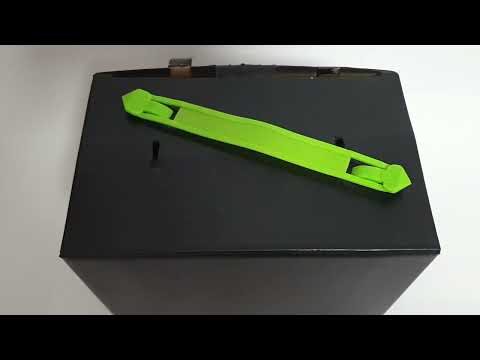
Upgrade Your Box Game with a Hidden Carrying Handle You Never Knew You Needed
A box carrying handle is a dedicated grip, often made of plastic or metal, attached to a container to make lifting and moving it much easier. By providing a secure, ergonomic hold, it transforms an awkward box into a balanced load, reducing strain on your hands and arms. Simply grab the handle with one or two hands, lift with your legs, and carry your items safely from place to place.
Why Handle Design Matters for Moving and Storage
A poorly designed box carrying handle forces your grip into an awkward, finger-cramping position, directly transferring stress to the wrist and lower back during repetitive moves. A recessed, ergonomically contoured handle allows your palm to carry the load with a neutral wrist angle, preventing the pinching that leads to fatigue or dropped boxes. For storage, a handle that is flush when not in use prevents snagging on shelving or other containers, maintaining stable stacking. Die-cut handles must have smooth, rounded edges to avoid paper cuts or digging into your fingers, especially when handling heavy loads. A handle that is too wide for your hand sacrifices control, turning a simple carry into a balancing act that risks structural box failure. Ultimately, the handle determines whether the box serves your effort or fights against it.
How the Right Cutout Reduces Strain on Your Hands
A precise cutout distributes weight across your palm’s fleshy pad, preventing pressure from concentrating on finger joints or the carpal tunnel. An ergonomic cutout with rounded, smooth edges eliminates sharp plastic ridges that dig into skin. The cutout’s width must match your hand’s thickness; too narrow forces a pinch grip that strains tendons, while too wide demands awkward spreading. A slight downward angle in the cutout aligns your wrist neutrally, reducing torque on forearm muscles. This design effectively channels load into your skeletal structure rather than soft tissues, minimizing fatigue during repeated lifts.
Does a cutout shape affect hand fatigue during long carries?
Yes. A poorly shaped cutout forces your fingers to bear weight, which strains flexor tendons over time. A correctly contoured cutout with a width matching your hand’s base allows the metacarpal bones to support the load, reducing muscle tension.
Ergonomics of Grip: Comfort vs. Discomfort During Transport
When carrying a box, your grip’s ergonomics directly determines whether the trip feels easy or miserable. A handle that’s too thin or sharp digs into your palm, creating painful pressure points that force you to constantly adjust your hold. This discomfort leads to muscle fatigue and a weaker, less secure carry. In contrast, a well-designed handle distributes weight across your hand, reducing strain and making the box feel lighter. Comfortable grip ergonomics prevent hand cramping and allow you to walk farther without carton box plastic handle needing to stop or switch hands.
A comfortable grip keeps your hands happy and your carry secure; a poor grip causes pain, fatigue, and constant readjustment.
Key Materials Used in Die-Cut Carrying Openings
For die-cut carrying openings serving as box handles, corrugated fiberboard is the primary material, with flute grade dictating rigidity. Heavyweight C-flute or double-wall board prevents tearing under load, while litho-laminated paperboard offers a smooth surface for precise, clean die cuts. A common concern: Does material thickness affect handle durability? Yes, thicker board (e.g., 200# test) resists edge compression and prevents the die-cut opening from collapsing under weight. For high-stress applications, a reinforced plastic or fabric patch may be laminated over the cut area, but standard boxes rely on board fiber orientation and notchless die contours to avoid stress fractures.
Corrugated Fiberboard and Its Structural Limits
Corrugated fiberboard in die-cut carrying handles relies on its fluted core for rigidity, yet structural limits emerge when the handle’s cutout disrupts the material’s continuous arch network. The board’s edge crush resistance directly dictates handle capacity, as a poorly oriented flute direction leads to catastrophic collapse under load. Overstressed die-cut openings tear along perforation lines when using lightweight single-wall board, while double-wall construction delays this failure. Handle aperture dimensioning is critical: too narrow and the fiberboard splinters from stress concentration, too wide and the panel buckles. Crease lines near the cutout further weaken the structure, causing premature deformation during lifting. Only precise die-cutting that aligns flute direction perpendicular to the handle’s tensile axis maximizes the board’s limited load-bearing potential.
Plastic Reinforcements for Heavy-Duty Use
For heavy-duty boxes, high-density polyethylene reinforcements are essential for die-cut carrying openings. These plastic inserts prevent handle tear-out by distributing the load across a larger area of the corrugated board. The reinforcement process follows a clear sequence: first, the plastic strip is precisely cut to match the handle slot dimensions; second, it is inserted into the die-cut opening; finally, it is bonded securely to the box panel. This method ensures the handle withstands repeated use with heavy contents, maintaining structural integrity without deforming.
Variations in Handle Styles Across Packaging
The worn cardboard box felt alive with variations in handle styles across packaging. This one, a bundle of holiday glassware, had die-cut plastic straps molded flush against the sides—a box carrying handle that let my fingers slip through without catching. Next to it, a keg of gourmet olives sported a recessed metal loop, its cold weight distributing evenly across my palm. That bakery carton, however, used integrated cutouts, the flap bent outward to form a native grip—strong until the edges frayed from moisture. Each style spoke to its load: flexible straps for bulky goods, rigid loops for dense items, and paper handles for lightweight, single-use deliveries. I chose the keg, trusting its permanent anchor over the temporary convenience of a folded tab.

Punch-Out Slots for Lightweight Cartons
For lightweight cartons like cereal boxes or small retail packages, punch-out slots offer a clever, integrated carrying solution. These pre-cut, perforated openings are folded inward to form a handle directly from the carton’s own material, eliminating the need for separate handles. Punch-out slot handles are ideal for items weighing under a few pounds, as the cardboard itself provides sufficient support. To avoid tearing, ensure the slot’s curved edges match your grip angle.

- Easily opened by pressing the perforated tab inward.
- Works best with single-wall corrugated or strong paperboard.
- Saves shipping space since no extra handle is attached.
Reinforced Metal or Plastic Inserts for Bulk Loads
For bulk loads exceeding standard weight thresholds, box carrying handles are often reinforced with metal or plastic inserts to prevent tear-out. These inserts distribute stress across a wider area of the corrugated board, allowing the handle to support significantly heavier contents without structural failure. High-load capacity inserts are typically stamped from galvanized steel or molded from high-impact nylon, chosen based on environmental exposure and cost constraints. The embedded design requires precise slotting during box manufacture, as improper alignment can create weak points. A solid insert engages directly with the box’s primary fluting, transferring load from the handhold to the box’s core structure.
- Metal inserts provide superior puncture resistance for heavy or abrasive bulk goods.
- Plastic inserts resist corrosion in humid or cold-storage environments.
- Insert thickness must match board grade to avoid crushing the surrounding material.
- Precision die-cut slots ensure the insert locks flush, preventing handle slippage during lift.

Engineering for Strength and Tear Resistance
For a box carrying handle, engineering for strength begins with the handle’s substrate, where a die-cut, reinforced fiberboard flap integrates a load-bearing crease that resists separation from the box wall. Strategic placement of adhesive bonds the handle along its full length to distribute tensile loads across the largest possible panel area, preventing localized tear initiation at stress points. Lamination of a high-tenacity polymer film into the handle’s die-cut path dramatically increases puncture and propagation resistance, even under repetitive lifting cycles. In high-strain zones, a subtle radius at the handle’s base rather than a sharp corner can reduce stress concentration by an order of magnitude. This composite approach—layering mechanical fastening, adhesive shear strength, and localized material reinforcement—ensures the handle remains functional until the box structurally fails elsewhere.

Weight Distribution Principles in Handle Panels
For box carrying handles, weight distribution principles in handle panels dictate that load transfer begins at the grip point and radiates outward through the panel’s structural core. A properly designed handle panel distributes force evenly across the attachment interface, preventing stress concentrations that cause localized tearing. The panel’s geometry must convert vertical lifting loads into shear forces along the panel’s longest axis, reducing bending moments that would otherwise concentrate at fastener points. Thicker panels with gradual load paths allow the material to absorb and redirect force over a broader area, ensuring the handle remains functional under maximum payload conditions without initiating failure at the connection points.
Double-Layered Cardboard vs. Single-Ply Openings
A single-ply opening acts as a stress concentrator; the handle cutout weakens the board’s cross-section, causing tearing under load as fibers separate along the perforation. To counteract this, a double-layered cardboard reinforcement distributes tensile forces across a thicker cross-section, delaying crack propagation at the handle slot. By bonding two plies around the opening, the material’s moment of inertia increases, resisting the bending moment induced by the user’s grip. This layered design effectively isolates tear initiation points, as the outer ply can fail while the inner ply maintains structural continuity, preventing catastrophic handle failure during use.
Double-layered cardboard at handle openings resists tearing by distributing stress across a thicker, bonded cross-section, while single-ply concentrates force directly at the cutout edge, leading to premature failure.
Customization Options for Branding and Function
Customization of a box carrying handle begins with material selection, where a rigid polypropylene strap supports heavy loads while a soft foam core improves grip comfort for repeated use. Branding is integrated directly into the handle through embossed logos or screen-printed graphics on the strap or grip pad, avoiding the need for separate labels. Functionally, the handle’s length can be tailored to accommodate specific hand sizes or box depths, while a pivoting attachment point reduces strain during carrying. For mixed-material boxes, a detachable handle clip allows the same branded handle to be reused across different container types. Color matching the handle to the box’s exterior panel ensures visual continuity without weakening the structural joint.
Shape Innovations: Oval, Rectangular, and Tapered Cuts
When choosing a box carrying handle, shape innovations like oval, rectangular, and tapered cuts offer distinct functional benefits. The oval handle provides a naturally ergonomic grip, perfect for prolonged carrying. Rectangular cuts create a cleaner, more structured look and are ideal for heavier boxes by distributing weight evenly across the hand. Tapered cuts, which narrow at the ends, improve hand clearance and reduce pinching for a more comfortable hold. These custom handle shapes for boxes directly influence ease of use and overall unboxing experience.
- Oval cuts offer better hand clearance and reduce strain on fingers.
- Rectangular cuts provide a modern aesthetic and support heavier loads.
- Tapered cuts minimize friction and suit smaller or e-commerce boxes.
Adding Foam Padding or Grip Tape to Cutouts
Adding foam padding or grip tape to handle cutouts directly improves user comfort and control. Foam padding, typically adhesive-backed, softens the contact area to prevent hand strain during heavy loads. Grip tape provides a textured surface that reduces slippage, especially in moist or high-movement environments. Application involves cutting the material to match the cutout’s shape and pressing it into place. This customisation adds minimal cost while significantly increasing the handle’s practical ergonomics and security.
Foam padding and grip tape enhance handle comfort and grip, making cutouts safer and easier to use.
Measuring and Sizing for Optimal Performance
For a box carrying handle, measuring your hand’s grip span is the first step to optimal performance. The handle’s diameter should sit comfortably in your palm without forcing a claw-like grip; a too-thin handle creates pressure points, while a too-thick one strains your fingers. Testing the handle’s width against your box’s center of gravity ensures you’re not fighting a tilted load. A handle length that’s at least 70% of the box’s side lets you spread the force evenly. Don’t just measure once—simulate the carry with weight to check if the handle clears your knuckles and body. This avoids awkward wrist angles that lead to fatigue or dropped boxes.
Determining the Correct Slot Width for Fingers
The ideal slot width must accommodate the average finger’s knuckle breadth, typically between finger slot dimension of 18 to 22 millimeters. A tighter 16mm width risks skin pinching and restricts circulation, while exceeding 25mm allows the finger to twist under load, reducing grip power. For protective gloves, add 2mm to the base measurement to avoid friction burns during long carries. Always test the slot with your index and middle fingers together; if they slide in without scraping and can curl fully into the handle, the width supports secure weight distribution.
Correct slot width (18–22mm) prevents pinching and twisting, optimizing grip for safe, sustained handling.
Depth of Cut: Balancing Accessibility and Carton Integrity
The depth of cut for your box handle is a tightrope walk between easy finger access and keeping the carton strong. A cut that’s too shallow forces users to struggle, potentially tearing the flap or knocking the box over. Conversely, a cut that’s too deep slices through the corrugated core, dangerously compromising the structural spine of the sidewall. The sweet spot is typically just deep enough to clear the linerboard on one side, leaving the opposite inner liner and flutes intact to bear the load. This balancing carton integrity and grip ensures the handle invites a comfortable hook without turning your package into a floppy disaster.
Industry-Specific Applications and Standards
In heavy-duty logistics, a box carrying handle must meet specific application standards for safety and ergonomics. For industrial shipping, handles often adhere to ASTM D4169 for drop-testing, ensuring they withstand rough handling without tearing. In retail packaging, standards focus on user comfort, requiring rounded cutouts and weight limits below 10 lbs to prevent hand strain. Cold-chain boxes demand reinforced, insulated handles that comply with ISTA 3A for temperature stability during transit. Medical or sensitive equipment boxes follow strict guidelines for cleanroom compatibility, using non-shedding materials. A key insight:
Always match handle material and attachment method to the box’s weight, environment, and reuse cycle—a single standard doesn’t fit all industries.
E-Commerce Shipping Boxes with Integrated Handles
For e-commerce shipping boxes with integrated handles, the handle design directly impacts both user ergonomics and package integrity during transit. These handles are typically die-cut into the corrugated fiberboard, with reinforced flaps or secondary liners to prevent tearing under weight. The primary engineering challenge is balancing handle placement to maintain the box’s structural strength while ensuring comfortable weight distribution for the carrier. This integration eliminates the need for separate handles or tape, streamlining fulfillment. The most effective designs feature a rounded cutout, at least 30mm in width, positioned above the box’s center of gravity for stable carrying. E-commerce shipping boxes with integrated handles reduce shipping damage by keeping the handle system inseparable from the container.
Integrated handles in e-commerce boxes combine structural reinforcement with ergonomic cutouts for safe, one-handed carrying without additional packaging materials.
Retail Display Cartons Designed for Easy Customer Carry
Retail display cartons designed for easy customer carry integrate the handle directly into the point-of-purchase packaging, often using a die-cut handle that folds flat for shipping and pops up for instant grab-and-go convenience. These cartons prioritize structural rigidity to prevent tearing when a shopper lifts multiple units, with reinforced apertures and double-layered cardboard at stress points. The handle placement is precisely aligned with the box’s center of gravity, ensuring balanced carrying without product shifting. By converting the display itself into a portable vessel, retailers eliminate the need for separate shopping bags, while ergonomic hand-fit cutouts accommodate gloved or bare hands for comfortable transport from shelf to car.
Common Pitfalls in Handle Layout and How to Avoid Them
A common pitfall is placing the box carrying handle too low, which forces the user to bend and strains the back. Position the handle near the box’s center of gravity to keep the load balanced. Installing it too flush against the box face can also cause painful finger pinching; ensure at least 1-2 inches of clearance for a full grip. Similarly, a handle that is too narrow won’t accommodate gloved hands or larger fingers. Use a width of at least 4-5 inches for comfortable carrying. Q: How do I avoid handle layout that makes the box tip? A: Always test the handle height with a loaded box—if it tilts forward, move the handle higher to align with the box’s heaviest contents.
Handle Positioning That Causes Carton Buckling
Positioning a handle too close to the carton’s edge or top flap can cause the board to collapse under weight. When the handle sits near a fold line or corner, it disrupts the structural spine of the box, leading to carton buckling during lifting. Even a well-made handle can fail if its placement doesn’t respect the box’s natural stress zones. Always center the handle in the strongest panel, away from seams and score lines, to distribute tension evenly and prevent the cardboard from folding in.
Handle placement near edges or folds weakens the box structure, causing buckling when weight is applied—keep handles centered in solid panel areas.
Avoiding Stress Points Near Product Placement
When positioning a box carrying handle, stress point isolation near product placement is critical. Locate the handle so it doesn’t sit directly over fragile items like glass or electronics. Instead, offset the handle toward structural ribs or reinforced cardboard pillars, which dissipate force before it reaches the product cavity. This prevents the handle’s tensile load from deforming sidewalls and compressing contents during lifting.
| Positioning | Result |
|---|---|
| Handle over empty void | Stress concentrates on sidewall, causing buckle |
| Handle near backing support | Load transfers cleanly, product stays protected |
Always verify the gap between the handle cutout and product inserts; too little spacing guarantees creasing.